


When people ask about the strongest metal in the world, there is no single answer. The strength of a metal or alloy depends on the property being considered, including tensile strength, yield strength, hardness, strength-to-weight ratio, high-temperature performance, corrosion resistance, and resistance to wear or deformation.
For example, tungsten is well known for its extremely high melting point, hardness, density, and high-temperature performance. Titanium is valued for its excellent strength-to-weight ratio and corrosion resistance, while high-strength steels can achieve very high tensile and yield strengths through alloying and heat treatment.
This article compares 10 metals and metal alloys commonly associated with exceptional mechanical, thermal, or chemical performance and explains where each material is most useful.
Quick Answer: What Is the Strongest Metal?
There is no single strongest metal for every application. The answer depends on the engineering property being measured.
- Tungsten is exceptional for high-temperature applications, hardness, density, and melting point.
- High-strength steel can provide very high tensile and yield strength and is widely used for structural applications.
- Titanium and titanium alloys offer an excellent combination of strength, low density, and corrosion resistance.
- Tantalum is particularly valuable where extreme corrosion resistance and chemical stability are required.
- Zirconium combines good mechanical properties with excellent corrosion resistance and low neutron absorption.
- Chromium is important for increasing hardness, wear resistance, and corrosion resistance in alloys.
- Vanadium is widely used as an alloying element to improve the strength and wear resistance of steel.
- Osmium has exceptionally high density and hardness, although density should not be confused with tensile strength.
- Iron is the fundamental metallic component of most steels and remains one of the most important structural metals.
- Nickel-based superalloys retain high mechanical strength and oxidation resistance at elevated temperatures.
Therefore, instead of asking which metal is simply “the strongest,” it is more useful to ask which metal or alloy is strongest for a specific property or application.
What Does "Strongest Metal" Actually Mean?
Metal strength can be described using several different properties. These properties are not interchangeable, and a material that performs exceptionally well in one category may not be the best choice in another.
| Property | What it measures | Materials commonly associated with the property |
|---|---|---|
| Tensile strength | Resistance to being pulled apart | High-strength steels, titanium alloys, superalloys |
| Yield strength | Resistance to permanent deformation | High-strength steels, titanium alloys |
| Hardness | Resistance to indentation, scratching, and wear | Tungsten, chromium-containing materials, hardened alloys |
| Strength-to-weight ratio | Strength relative to density | Titanium alloys |
| High-temperature strength | Ability to retain mechanical performance at elevated temperature | Tungsten, nickel-based superalloys |
| Corrosion resistance | Resistance to chemical degradation | Tantalum, titanium, zirconium |
| Wear resistance | Resistance to material loss during friction or contact | Tungsten-containing materials, hardened alloys |
| Fracture toughness | Resistance to crack propagation | Strongly dependent on alloy composition and microstructure |
This distinction is important because melting point, hardness, density, and tensile strength describe different aspects of material performance. A high melting point does not automatically mean that a material has the highest tensile strength, and a high density does not necessarily indicate superior mechanical strength.
10 Strong Metals and Metal Alloys
1. Tungsten
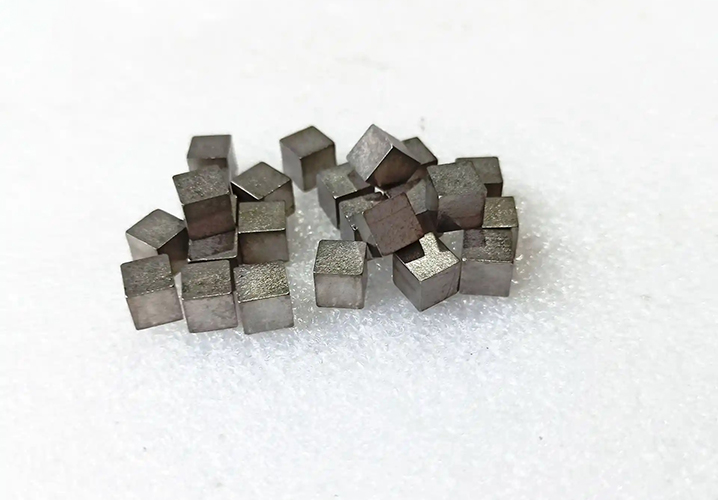
Tungsten is one of the most notable refractory metals because of its exceptionally high melting point, high density, hardness, and ability to perform under extreme temperatures.
With a melting point of approximately 3,422°C, tungsten has the highest melting point among the metals. It is also highly resistant to deformation at elevated temperatures compared with many conventional structural metals.
Tungsten is used in:
- High-temperature components
- Welding electrodes
- Electrical contacts
- Heating elements
- Specialized tooling
- Aerospace and high-performance engineering applications
Tungsten’s combination of thermal stability, hardness, and density makes it particularly useful when conventional metals cannot withstand the required operating conditions.
2. High-Strength Steel
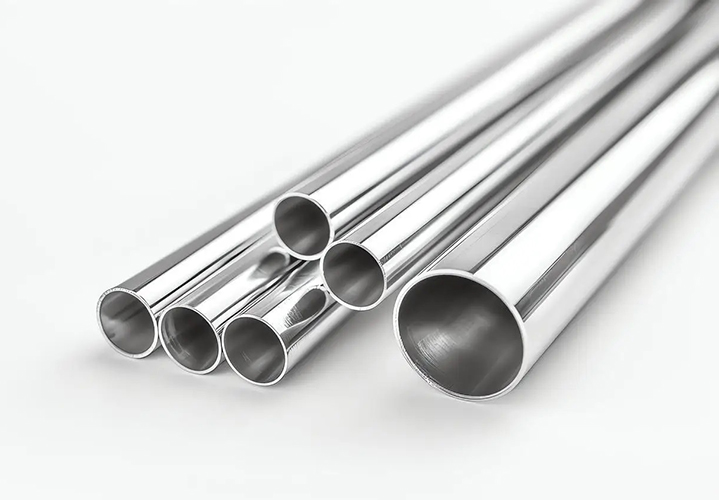
Steel is an alloy rather than a pure metal, primarily based on iron and carbon with controlled additions of other alloying elements.
The mechanical properties of steel vary enormously depending on composition, heat treatment, processing, and microstructure. High-strength and ultra-high-strength steels can achieve very high tensile and yield strengths while retaining useful toughness and manufacturability.
Steel is widely used in:
- Buildings and bridges
- Automotive structures
- Heavy machinery
- Pressure vessels
- Infrastructure
- Tools and industrial equipment
Because steel can be engineered for different combinations of strength, toughness, hardness, and corrosion resistance, it remains one of the most important engineering materials.
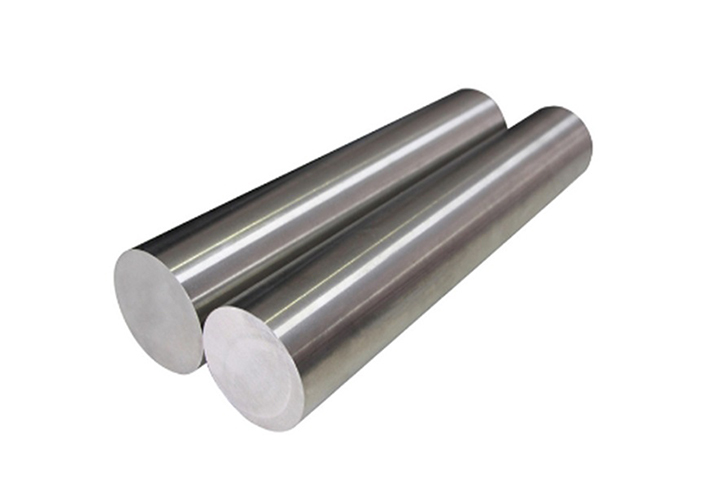
Titanium is a lightweight, silver-colored metal known for its excellent strength-to-weight ratio and corrosion resistance.
Although pure titanium and titanium alloys have different mechanical properties, titanium alloys are particularly important where high mechanical performance must be combined with relatively low density.
Titanium is widely used in:
- Aerospace components
- Aircraft structures
- Medical implants
- Chemical processing equipment
- Marine applications
- High-performance engineering
Titanium is also highly resistant to many corrosive environments because of the stable protective oxide layer that forms on its surface.
4. Chromium
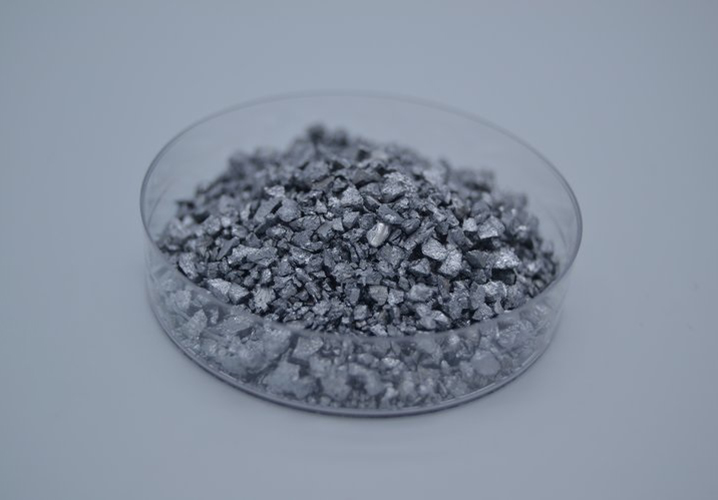
Chromium is a hard, lustrous metal with important applications in alloy development. Rather than being used primarily as a structural metal by itself, chromium is particularly valuable because it can significantly influence the hardness, oxidation resistance, and corrosion resistance of alloys.
Chromium is a key component of stainless steels. A sufficient chromium content allows stainless steel to form a passive oxide layer that provides enhanced resistance to corrosion.
Chromium is used in:
- Stainless steel
- Alloy steels
- Wear-resistant materials
- Electroplating
- High-temperature alloys
- Specialized coatings
Its importance in engineering therefore comes not only from its own mechanical properties but also from its role in modifying the performance of other materials.
5. Tantalum
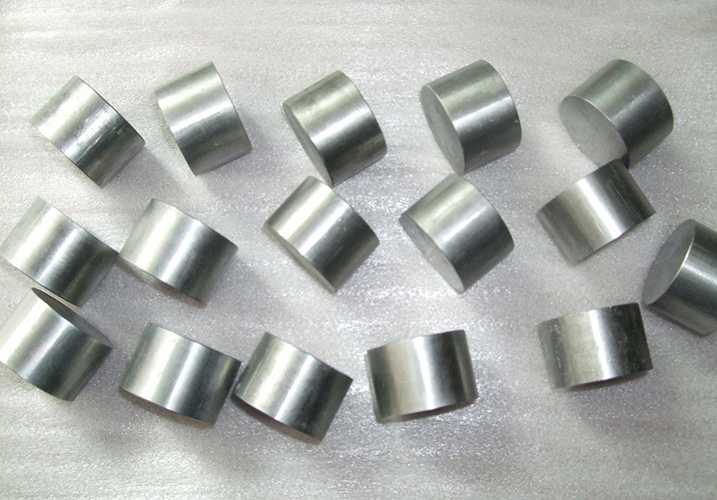
Tantalum is a rare refractory metal recognized for its exceptional corrosion resistance and chemical stability.
It has a melting point of approximately 3,017°C, placing it among the highest-melting-point metals. Tantalum maintains excellent resistance to many aggressive chemical environments and is therefore useful in demanding applications where conventional metals may corrode.
Tantalum is used in:
- Chemical processing equipment
- Electronics and capacitors
- Medical components
- High-temperature applications
- Vacuum and specialized engineering systems
- Sputtering targets and advanced material applications
For tantalum, chemical stability and corrosion resistance are often more important selection criteria than simply maximizing tensile strength.
6. Vanadium
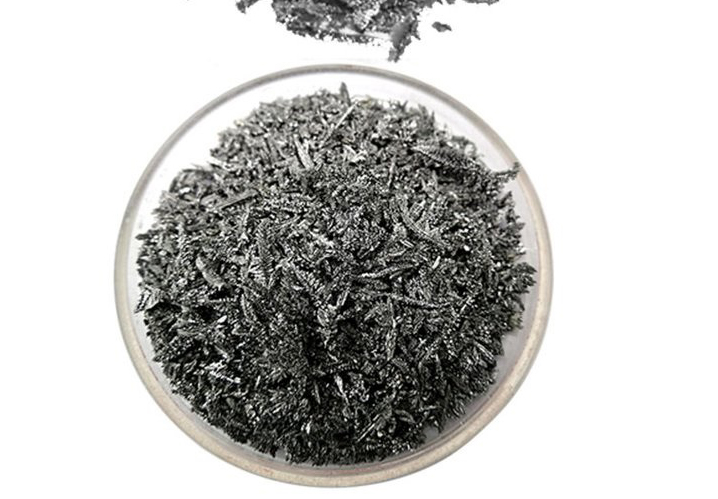
Vanadium is a hard, silvery-gray transition metal that is particularly important as an alloying element.
Small additions of vanadium can help refine microstructure and improve the strength, hardness, wear resistance, and high-temperature performance of certain steels and other alloys.
Vanadium is used in:
- High-strength steels
- Tool steels
- Aerospace alloys
- Wear-resistant materials
- Specialized engineering alloys
- Research and advanced materials
Its industrial significance therefore comes largely from its ability to improve the performance of other metals through alloying.
7. Zirconium
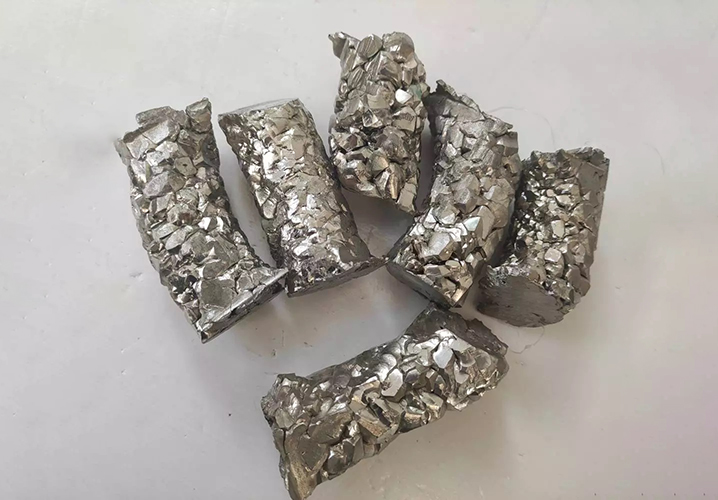
Zirconium is a corrosion-resistant transition metal with a grayish-white metallic appearance.
One of its most important characteristics is its excellent resistance to corrosion in many environments. Zirconium also has a relatively low neutron absorption cross-section, which contributes to its use in nuclear technology.
Zirconium is used in:
- Nuclear reactor components
- Chemical processing equipment
- Corrosion-resistant applications
- Ceramics and advanced materials
- Medical and dental applications
For zirconium, corrosion resistance and stability in demanding environments are often more important than achieving the highest possible tensile strength.
8. Osmium
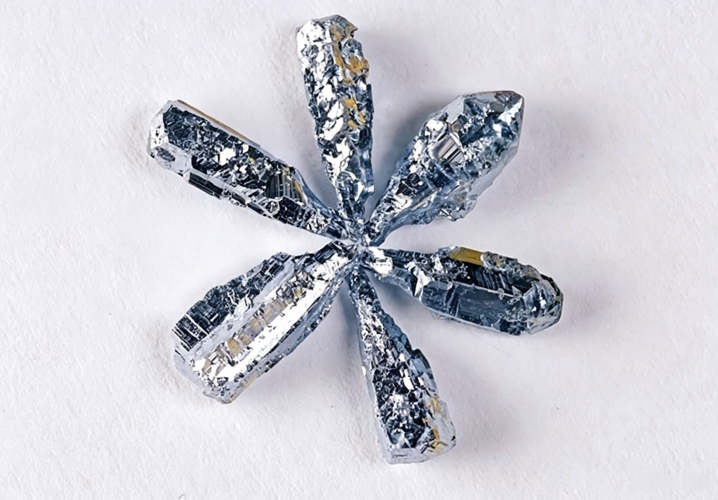
Osmium is a rare platinum-group metal and one of the densest naturally occurring elements.
It is notable for its exceptionally high density and hardness. However, density should not be treated as a direct measurement of tensile strength. Osmium’s unusual physical properties make it valuable mainly in specialized applications rather than large-scale structural engineering.
Historically and in specialized applications, osmium-containing materials have been associated with:
- Precision instruments
- Electrical contacts
- Specialized wear-resistant components
- Research applications
Because of its rarity, cost, and handling considerations, osmium has a much narrower industrial role than steel, titanium, or tungsten.
9. Iron
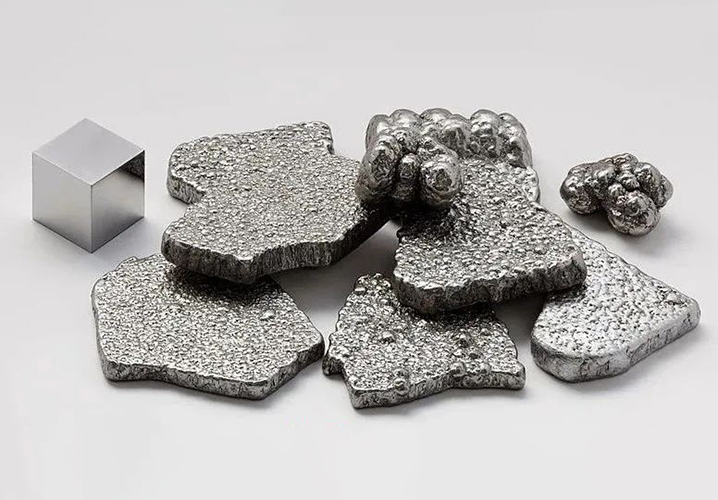
Iron is one of the most abundant and widely used metals and forms the fundamental metallic base of most conventional steels.
Pure iron is not generally selected when the highest possible mechanical strength is required. Instead, its importance comes from its ability to form a wide range of alloys with carbon and other elements.
Iron-based materials are used in:
- Construction
- Automotive manufacturing
- Infrastructure
- Machinery
- Tools
- Industrial equipment
The versatility of iron is one of the main reasons steel has become one of the world’s most important engineering material families.
10. Nickel-Based Superalloys
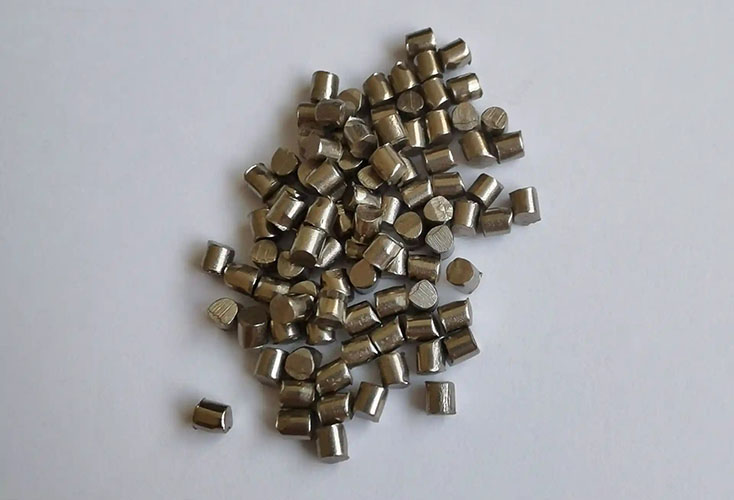
Nickel-based superalloys deserve attention when strength must be maintained at elevated temperatures.
These alloys are designed to retain mechanical strength, creep resistance, and oxidation resistance under demanding thermal conditions. Their performance comes from carefully controlled alloy chemistry and microstructure rather than from nickel alone.
Nickel-based superalloys are widely used in:
- Gas turbine components
- Aerospace engines
- Power-generation equipment
- High-temperature processing equipment
- Chemical and energy applications
For applications involving sustained high temperatures, a nickel-based superalloy can be more appropriate than a material selected solely for room-temperature tensile strength.
| Material | Key Strength or Performance Advantage | Typical Applications |
|---|---|---|
| Tungsten | Extremely high melting point, hardness, density, and high-temperature performance | Welding electrodes, electrical contacts, heating elements, aerospace and specialized engineering |
| High-Strength Steel | Very high tensile and yield strength with adjustable mechanical properties | Construction, automotive, infrastructure, machinery, pressure vessels |
| Titanium and Titanium Alloys | Excellent strength-to-weight ratio and corrosion resistance | Aerospace, medical implants, chemical processing, marine applications |
| Chromium | Contributes to hardness, wear resistance, oxidation resistance, and corrosion resistance in alloys | Stainless steel, alloy steels, coatings, electroplating |
| Tantalum | Exceptional corrosion resistance and chemical stability | Chemical processing, electronics, medical components, sputtering targets |
| Vanadium | Improves strength, hardness, wear resistance, and high-temperature performance in alloys | High-strength steels, tool steels, aerospace alloys |
| Zirconium | Excellent corrosion resistance and low neutron absorption | Nuclear technology, chemical processing, advanced materials |
| Osmium | Exceptionally high density and hardness | Specialized instruments, electrical contacts, research applications |
| Iron | Versatile base metal for steel and iron-based alloys | Construction, automotive, machinery, infrastructure |
| Nickel-Based Superalloys | High strength, creep resistance, and oxidation resistance at elevated temperatures | Gas turbines, aerospace engines, power generation, high-temperature equipment |
Which Metal Is Strongest for Different Properties?
Rather than assigning an absolute ranking, material selection becomes more meaningful when the required property is identified first.
| Engineering requirement | Materials to consider |
|---|---|
| Very high melting point | Tungsten |
| High-temperature performance | Tungsten, nickel-based superalloys |
| High tensile and yield strength | High-strength steels, selected titanium alloys, superalloys |
| High strength-to-weight ratio | Titanium alloys |
| High hardness | Tungsten and selected hardened alloys |
| Excellent corrosion resistance | Tantalum, titanium, zirconium |
| Alloy strengthening | Vanadium, chromium and other alloying elements |
| Structural engineering | High-strength steels |
| Extreme chemical environments | Tantalum and zirconium |
| Specialized high-temperature aerospace applications | Nickel-based superalloys |
This comparison illustrates why there is no universal “strongest metal.” The best material depends on the combination of mechanical, thermal, chemical, dimensional, and processing requirements.
Strongest Metal vs. Hardest Metal
“Strong” and “hard” are often used interchangeably in everyday language, but they describe different material properties.
Strength generally refers to a material’s ability to withstand applied stress without yielding, deforming permanently, or fracturing.
Hardness describes a material’s resistance to localized deformation such as indentation, scratching, or wear.
A material can therefore be very hard without having the highest tensile strength. Likewise, a material with high tensile strength may not have the highest hardness.
This distinction is especially important when comparing refractory metals, tool materials, steels, and advanced alloys.
Why Alloys Can Be Stronger Than Pure Metals
Many of the highest-performance engineering materials are alloys rather than pure metals.
Alloying can change a material’s:
- Yield strength
- Tensile strength
- Hardness
- Toughness
- Corrosion resistance
- Oxidation resistance
- High-temperature stability
- Wear resistance
Heat treatment and microstructural control can further modify these properties.
For this reason, comparing a pure metal directly with a high-performance alloy can produce misleading conclusions. For engineering applications, the specific grade, composition, processing route, and service conditions should always be considered.
How to Choose a Strong Metal for Your Application
The strongest material on paper is not necessarily the most suitable material for a real engineering application.
Material selection should consider several factors:
1. Mechanical requirements
Determine whether the primary requirement is tensile strength, yield strength, hardness, toughness, fatigue resistance, or wear resistance.
2. Operating temperature
For high-temperature applications, melting point alone is not sufficient. Creep resistance, oxidation resistance, thermal stability, and mechanical strength at the actual operating temperature should also be considered.
3. Corrosion environment
For chemical processing and aggressive environments, corrosion resistance may be more important than maximum tensile strength. Tantalum, titanium, and zirconium can be valuable in such applications.
4. Weight limitations
When weight is critical, specific strength becomes particularly important. Titanium alloys are often considered because they combine relatively low density with high mechanical performance.
5. Material form and processing
The final material may need to be supplied as powder, sputtering target, granule, pellet, plate, tube, or another customized form. Processing requirements can influence which material and grade are practical.
6. Purity and dimensional requirements
Advanced applications may require controlled purity, particle size, dimensions, geometry, or packaging. These specifications should be established together with the intended application and processing method.
VIMATERIAL's Approach to Advanced Material Selection
At VIMATERIAL, material selection is considered from the perspective of the required application rather than a simple “strongest metal” ranking.
Different applications require different combinations of properties. A material selected for extreme-temperature stability may be different from one selected for lightweight structural performance, corrosion resistance, wear resistance, or thin-film deposition.
VIMATERIAL supplies advanced materials in forms including sputtering targets, evaporation materials, powders, granules, pellets, and customized material geometries. Material specifications can be tailored according to requirements such as purity, particle size, dimensions, shape, and application conditions.
For demanding applications, selecting the right material therefore starts with defining the required performance rather than simply choosing the metal with the highest numerical strength value.
Frequently Asked Questions
1. What is the strongest metal in the world?
There is no single strongest metal for every measurement. Tungsten is exceptional for melting point, hardness, density, and high-temperature performance, while high-strength steels and selected alloys can achieve very high tensile and yield strengths.
2. Is tungsten stronger than titanium?
It depends on the property being compared. Tungsten has a much higher density and melting point and is highly resistant to high-temperature deformation. Titanium and titanium alloys provide a much better strength-to-weight ratio and excellent corrosion resistance. The appropriate choice depends on the application.
3. Is steel stronger than pure metal?
Some high-strength steels can achieve higher tensile and yield strengths than many pure metals. However, “steel” includes a very large range of compositions and grades, so its mechanical properties vary substantially.
4. What is the hardest metal?
Hardness depends on the material grade, microstructure, processing, and test method. Tungsten and chromium are commonly associated with high hardness, while many engineered alloys and hard materials can achieve even higher hardness than their constituent pure metals.
5. What metal has the best strength-to-weight ratio?
Titanium alloys are widely recognized for their excellent combination of mechanical strength and relatively low density. This makes them particularly useful in aerospace and other weight-sensitive applications.
6. What is the best metal for high-temperature applications?
The answer depends on the temperature, atmosphere, mechanical load, and service life. Tungsten is notable for its extremely high melting point, while nickel-based superalloys are widely used where high strength, creep resistance, and oxidation resistance are required at elevated temperatures.
7. Why is there no single strongest metal?
Because strength is not one property. Tensile strength, yield strength, hardness, toughness, specific strength, high-temperature strength, and corrosion resistance measure different aspects of material performance. A material that performs exceptionally well in one category may not be the best in another.
8. Are alloys generally stronger than pure metals?
Alloying can significantly improve strength, hardness, toughness, corrosion resistance, or high-temperature performance. However, the effect depends on the alloy composition, processing method, heat treatment, and microstructure.
Conclusion
The concept of the “strongest metal” is more complex than a simple top-10 ranking. Tungsten stands out for extreme temperature resistance and hardness, titanium for strength-to-weight performance, high-strength steels for structural strength, tantalum and zirconium for corrosion resistance, and nickel-based superalloys for demanding high-temperature applications.
For engineering material selection, the most useful question is therefore not simply “Which metal is the strongest?”, but “Which material provides the required combination of strength, hardness, weight, temperature resistance, corrosion resistance, and processing characteristics for the application?“
Understanding these differences allows engineers and material buyers to select materials based on actual performance requirements rather than relying on a single strength ranking.
For customized advanced materials, including powders, sputtering targets, evaporation materials, granules, pellets, and special geometries, VIMATERIAL supports material selection according to application, purity, particle size, dimensions, shape, and other technical requirements, and also provides sputtering target bonding services for customized target assemblies.
References
- [1] Royal Society of Chemistry. Tungsten — Element information, properties and uses.
- [2] ASM International. ASM Handbooks — Heat Treating.
- [3] NASA Glenn Research Center. High-Temperature Ni-Based Superalloy Composition.
- [4] NASA Technical Reports Server. Nickel-base superalloys developed for high-temperature applications.
- [5] Nickel Institute. Pickling and Passivating Stainless Steel.
Related Materials
Need a Custom Material Solution?
Choosing the right material depends on more than strength alone. VIMATERIAL provides customized advanced materials based on your application, required purity, particle size, dimensions, shape, and other technical specifications.
We supply powders, sputtering targets, evaporation materials, granules, pellets, and special geometries, with sputtering target bonding services available for customized target assemblies.
Tell us your material requirements and application — our technical team can help you identify a suitable material solution.