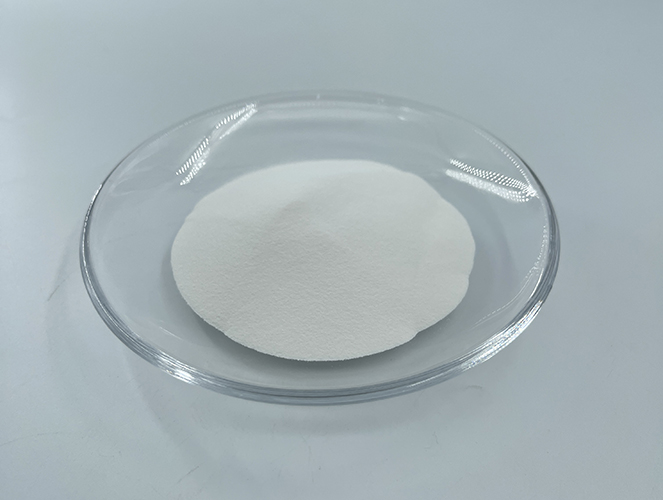
High Purity Alumina (HPA): Properties, Production, and Applications

View Our Products

Contact Us Now !

High purity alumina (HPA) powder exhibits exceptional optical, electrical, magnetic, thermal, and mechanical properties that far surpass those of conventional alumina. It is a critical advanced material widely used in aerospace, semiconductors, nuclear energy, new energy, metallurgy, biomedicine, lighting, machinery, and chemical industries. Today, HPA is considered one of the most valuable and versatile high-end materials in modern chemical engineering.

I. What is High Purity Alumina?

High purity alumina powder is an inorganic, non-metallic material primarily composed of aluminum oxide (Al₂O₃). Its defining characteristic is its extremely high purity—typically ≥99.99%. Using advanced processes such as atomization, it can be produced as ultra-fine spherical particles, with sizes ranging from micrometers down to nanometers (e.g., 1–50 nm for ultra-fine grades).

HPA mainly exists in two crystalline forms:

  • Alpha (α) phase: Thermodynamically stable, highly resistant to high temperatures, widely used in sapphire crystals and precision ceramics
  • Gamma (γ) phase: Metastable, porous, and highly reactive, suitable for catalytic and adsorption applications

Due to its high hardness, high melting point, excellent chemical resistance, and outstanding thermal stability, HPA performs exceptionally well in thermal conductivity, electrical insulation, and wear resistance, making it indispensable in modern industry.

High purity alumina powder

Key Properties of Ultra High Purity Alumina HPA

Ultra-high purity: Impurity levels (Na, Fe, Si, etc.) are controlled at the ppm level using processes such as sol-gel synthesis and chemical vapor deposition (CVD).

High temperature resistance:
Melting point: ~2050°C
Continuous operating temperature: up to 1600°C
Short-term tolerance: up to 1800°C

Excellent chemical stability: For example, after immersion in HCl (pH = 1) for 24 hours, mass loss is less than 0.01%, outperforming materials like zirconia (ZrO₂).

Outstanding mechanical properties: Mohs hardness ~9 (second only to diamond), with high compressive and flexural strength.

Superior electrical insulation: At 1 MHz, dielectric constant remains stable at 9.8–10.2, with a loss tangent below 0.0002.

Key Parameters and Performance Relationships

A purity level of ≥99.99% ensures chemical stability in high-temperature environments and prevents performance degradation caused by impurities.

Particle size distribution is also critical:

  • Micron-scale particles (~1 μm): Suitable for high-strength structural ceramics
  • Nano-scale particles (~50 nm): Exhibit quantum effects and are ideal for advanced applications such as transparent ceramics and phosphor materials

For example, in LED packaging, nano-alumina enables both high optical transmittance (>90%) and high thermal conductivity (>10 W/m·K), overcoming the traditional trade-off between transparency and heat dissipation.

Additionally, vacuum or sealed packaging prevents moisture absorption and agglomeration, extending storage life.

Phase-Based Product Series

Alpha (α) Phase Series

As the stable high-temperature phase, α-alumina offers excellent hardness and wear resistance. It is widely used in ceramics, abrasives, aerospace, and automotive applications where extreme temperature resistance is required.
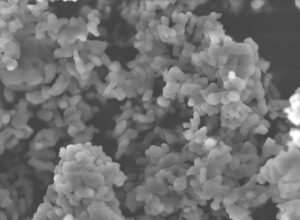
α-phase High purity alumina

Gamma (γ) Phase Series

As a transitional low-temperature phase, γ-alumina features high porosity and surface area, making it ideal for catalyst supports and adsorbents. Its structure also enhances electrode rate capability and cycling stability, helping mitigate volume expansion and degradation during charge-discharge cycles.
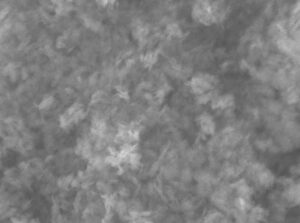
γ-phase high purity alumina

II. Production Technologies

HPA can be produced via various methods, including liquid-phase, gas-phase, and solid-phase processes.

Among them, the alkoxide hydrolysis method is becoming the preferred route for semiconductor-grade alumina due to its mild reaction conditions and high product purity, gradually replacing the traditional Bayer process.

In atomization processes, molten aluminum or precursor materials are dispersed into fine droplets using high-pressure gas and rapidly solidified into spherical particles. This morphology:

  • Increases specific surface area (enhancing reactivity)
  • Reduces inter-particle friction
  • Improves dispersion in composite systems

For instance:

  • In ceramics: lowers sintering temperature and improves density
  • In thermal materials: nano-sized particles fill micro-voids, forming continuous heat conduction networks and increasing thermal conductivity by over 30%

III. What's the Application Fields of High Purity Alumina

Thanks to its superior properties, HPA is widely used in high-tech industries:

Electronics & Semiconductors

  • Sapphire substrates for LEDs
  • Gate dielectric layers in semiconductor chips
  • Passivation layers in 5G RF devices

New Energy

  • Lithium battery separator coatings
  • Solid electrolyte coatings (e.g., LiCoO₂ cathode surface modification)
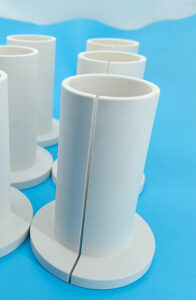
  • High purity alumina ceramic - VIMATERIAL

Optics & Display

  • Transparent alumina ceramic tubes for high-pressure sodium lamps
  • Plasma display materials
  • OLED panels

Advanced Ceramics

  • High-strength alumina ceramics
  • Artificial joints and bone implants
  • Industrial cutting tool coatings

Other Fields

  • Catalyst supports
  • Precision polishing materials
  • Infrared absorption and heating materials

It is worth noting that purity requirements vary significantly by application. For example, electronic packaging requires ≥99.99% purity to prevent insulation failure, while general wear-resistant materials may only require ~99.5%.

IV. Safety Considerations

High purity alumina is generally safe, but two special cases require attention:

  • Nano-scale powders may pose a dust explosion risk when particle size is below 50 μm and airborne concentration exceeds 40 g/m³
  • Molten alumina may react violently with strong reducing agents (e.g., sodium metal)

Proper ventilation and avoiding inhalation of ultra-fine powders are sufficient for safe handling.

Recommended Safety Practices

For industrial applications:

  • Particles >100 μm can be handled directly
  • Wear N95 masks when handling fine powders
  • Maintain storage humidity below 60%

V. Conclusion

As a key branch of advanced inorganic non-metallic materials, high purity alumina powder plays a vital role across multiple high-tech industries due to its outstanding physical and chemical properties.

With ongoing industrial advancement, demand for HPA is expected to grow in emerging applications such as:

  • Solid-state batteries: improving ionic conductivity by up to two orders of magnitude
  • AI chip packaging: low dielectric constant powders (ε ≈ 8.5) help reduce signal interference
  • Space-based 3D printing: in-situ fabrication of alumina structures on the Moon, offering up to 300% improved radiation resistance

Frequently Asked Questions about High purity Alumina

What is high purity alumina?

High purity alumina (HPA) is a high-grade inorganic material mainly composed of aluminum oxide (Al₂O₃) with a purity of typically ≥99.99%. It can be produced as ultra-fine particles and exists mainly in α-phase (high-temperature stable) and γ-phase (porous and active) forms. With its excellent hardness, thermal stability, chemical resistance, and electrical insulation, HPA is a key functional material widely used in advanced industrial applications.

The highest purity of alumina (Al₂O₃) currently available typically reaches 5N level (99.999%). At this level, impurity elements such as sodium, iron, and silicon are reduced to extremely low concentrations (ppm or even ppb levels), ensuring outstanding chemical stability and electrical performance. Such ultra-high purity alumina is mainly used in demanding applications like semiconductors, sapphire crystal growth, and advanced electronic materials, where even trace impurities can significantly affect performance.

Alumina (Al₂O₃) purity is typically classified using the “N” grading system, where “N” represents the number of nines in the purity percentage:

3N (99.9%): Industrial-grade high-purity alumina, commonly used in ceramics and general applications
4N (99.99%): Standard high purity, suitable for LEDs, lithium batteries, and electronic materials
4N5 (99.995%): Higher-grade purity for more demanding electronic and optical applications
5N (99.999%): Ultra-high purity, used in semiconductors, sapphire crystal growth, and advanced technologies

In general, higher purity means lower impurity content and better performance in high-end applications.

HPA (High Purity Alumina) is an advanced inorganic material primarily composed of aluminum oxide (Al₂O₃) with a purity of typically 99.99% (4N) or higher. It is produced through refined processes to achieve extremely low impurity levels and is known for its excellent thermal stability, electrical insulation, high hardness, and chemical resistance. Thanks to these properties, HPA is widely used in high-tech applications such as LED sapphire substrates, semiconductor components, lithium batteries, and advanced ceramics, making it an essential material in modern industry.

Contact Us

Contact Us