Indium Powder: Properties, Production Methods, Applications, and Buying Guide

View Our Products

Contact Us Now !

Indium powder is a metallic powder made from the element indium. Indium is classified as a rare dispersed metal and is relatively scarce in nature. Due to its unique physical and chemical properties, indium powder is widely used in many industries.

The main production methods for In powder include atomization, electrolysis, and mechanical milling. Among these methods, atomized indium powder offers uniform particle size and high sphericity, making it ideal for precision applications.

Indium metal powder is known for its high purity (typically above 99.99%), low melting point (approximately 156.6°C), good electrical conductivity, and excellent malleability. These characteristics make it an important material in advanced technology industries.

In the electronics industry, In powder is commonly used in the production of transparent conductive films such as ITO targets, semiconductor devices, and low-temperature solder materials. It is also used in nuclear reactors as a neutron-absorbing material and in the medical industry for radioactive tracers.

Indium Powder - VIMATERIAL

1. Properties

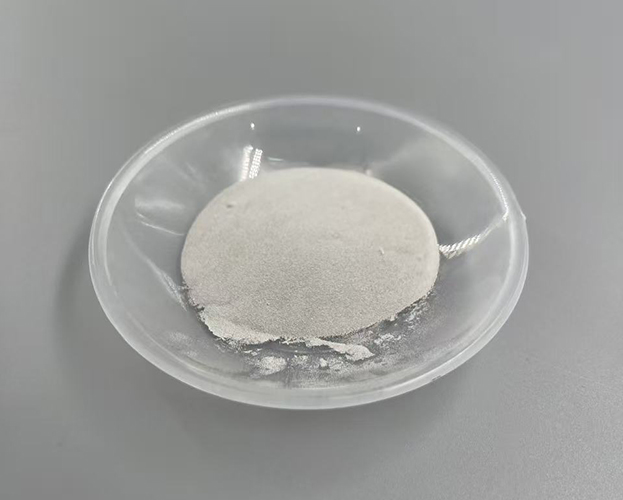
Indium powder usually appears silver-white in color and has a soft texture. It can easily be cut, pressed, or deformed. Depending on the manufacturing process, the particle size of In powder can vary, with common sizes ranging from a few microns to several tens of microns.

In powder has a relatively high density and a low melting point of around 156°C, making it suitable for low-temperature applications.

Another important characteristic is its excellent ductility and plasticity. Indium powder can easily form alloys with other metals.

Indium metal powder also offers good electrical conductivity and thermal conductivity, which can improve current transmission efficiency in electronic components. These properties give it significant value in the electronics industry.

At room temperature, indium powder is relatively stable. However, under certain conditions it may oxidize. When exposed to air, a thin oxide layer forms on the surface of the powder. This layer helps prevent further oxidation and is one reason why indium powder performs well in industrial applications, especially in electronics manufacturing.

However, in some applications, surface oxidation may affect performance. Therefore, In powder should be stored in a dry environment and preferably in sealed containers.

2. How to make Indium Powder?

There are several common methods used to produce indium powder:

2.1 Mechanical Method

Mechanical milling is used to crush indium ingots or blocks into powder. This method is relatively simple, but the grinding conditions must be carefully controlled to ensure uniform particle size.

2.2 Chemical Method

Chemical production methods include electrolysis and reduction.

  • Electrolysis: Indium is deposited as powder by applying an electric current in a suitable electrolyte solution.
  • Reduction: Indium compounds are chemically reduced into metallic indium powder using reducing agents.
Indium metal Powder - VIMATERIAL

2.3 Atomization Method

In the atomization process, molten indium is dispersed into tiny droplets by high-pressure gas or centrifugal force. The droplets are then cooled and solidified into powder.

This method can produce spherical indium powder with excellent flowability, making it particularly suitable for high-precision and electronic applications.

Different manufacturing methods produce indium powder with different particle shapes, purity levels, and particle size distributions. Users should select the most suitable type according to their specific requirements.

3. Main Applications of Indium Powder

Indium powder is used in a wide range of industries, including:

3.1 Electronics Industry

In the electronics industry, indium is primarily used in the form of indium tin oxide (ITO) for touchscreens, displays, LCD panels, and other electronic devices. Its high conductivity and transparency make it an essential material.

3.2 Semiconductor Industry

In semiconductor manufacturing, indium powder is used as a doping material or electrode material. It can be combined with other elements to create compound semiconductors used in high-performance semiconductor devices.

3.3 Optoelectronic Materials

In powder is also used in solar photovoltaic cells as part of the electrode material, helping improve conductivity and overall efficiency.

Optoelectronic materials - VIMATERIAL

3.4 Alloy Manufacturing

High-purity indium powder is often used as an alloy additive. It can improve casting performance and mechanical properties, making it valuable in the aerospace and automotive industries.

3.5 Nuclear Industry

Due to its neutron absorption properties, indium powder is used in control rods for nuclear reactors.

4. Safety Precautions

When working with In powder, the following precautions should be observed:

4.1 Personal Protection

Operators should wear appropriate protective equipment and work in a well-ventilated area. Direct contact and inhalation should be avoided. Although indium powder has relatively low toxicity, long-term exposure may affect health.

4.2 Storage Conditions

In powder should be stored in a cool, dry place away from fire sources and oxidizing agents. Moisture can cause oxidation and reduce product performance. Sealed containers are recommended.

4.3 Handling and Disposal

The working area should be kept well ventilated to prevent powder accumulation. Waste indium powder should be recycled or disposed of according to hazardous waste regulations to avoid environmental contamination.

5. What Should You Consider When Choosing Indium Powder?

The production of indium powder requires specialized equipment and technical expertise. Converting indium ingots into powder involves multiple processing steps, each of which must be carefully controlled.

A qualified supplier should have the necessary production capabilities and certifications to ensure stable and reliable product quality.

During transportation, In powder must comply with relevant regulations. In most regions, indium powder is classified as a standard chemical material, although the exact classification may vary depending on local laws.

Packaging should protect the material from vibration, impact, and high temperatures during transport.

Quality control is another key factor. Reliable manufacturers should establish a complete quality management system, including:

  • Raw material inspection
  • Process control
  • Finished product testing
  • Particle size analysis
  • Purity testing

Strict quality control ensures that the indium powder meets technical specifications and performance requirements.

For end users, understanding the basic properties of In powder is essential. Before purchasing or using the material, it is recommended to review the product datasheet carefully and confirm the specific purity, particle size, and intended application.

6. Market Outlook

As technology continues to develop, the application range of In powder is expected to expand further.

Researchers are currently exploring the use of indium powder in new materials, including energy storage and energy conversion technologies. These developments may create new market opportunities in the future.

The price of In powder is influenced by several factors, including:

  • Cost of raw indium
  • Complexity of the manufacturing process
  • Market demand
  • Product purity
  • Particle size distribution

In recent years, demand for indium powder has increased along with the growth of the electronics industry. However, supply has remained relatively stable, so price fluctuations have been moderate.

Depending on purity and particle size, the market price of indium powder typically ranges from several thousand to over ten thousand RMB per kilogram.

There are many suppliers on the market, and buyers should compare specifications, quality certificates, and test reports before making a purchase.

Overall, In powder is a valuable material with a wide range of industrial applications. As technology advances, its importance is likely to continue growing.

7. Frequently Asked Questions About Indium Powder

Q: What makes indium powder different from other metal powders?

A: In powder has a lower melting point and better ductility than many other metal powders. Compared with copper powder or aluminum powder, its electrical conductivity is slightly lower, but it offers better stability in certain environments.

Q: How do I choose the right indium powder specification?

A: The most important factors are particle size distribution, purity, and particle shape.

For example:

In powder for conductive paste usually requires very fine particle size and high purity.

In powder for solder applications may require better flowability and spreading performance.

Q3: What affects the price of indium powder?

A: The price of In powder is mainly affected by raw material cost, production technology, and market demand. Higher-purity indium powder with more uniform particle size is generally more expensive.

In addition, more advanced production methods usually increase the final product cost. Although technological progress has gradually reduced production costs, indium powder is still considered a relatively expensive metal powder.

Conclusion

Indium powder is an important advanced material with excellent conductivity, low melting point, and strong alloying capability. It plays a key role in electronics, semiconductors, solar energy, aerospace, and nuclear technology.

For companies looking to source In powder in Germany or Europe, selecting a trusted supplier with stable quality, detailed test reports, and suitable particle size specifications is essential for achieving the best performance.

Contact Us

Contact Us