


LATP solid electrolyte is widely regarded as one of the most promising solid electrolytes for next-generation energy storage systems. With the growing demand for safer and higher-performance batteries, particularly in electric vehicles and renewable energy storage, LATP solid electrolyte has attracted significant attention due to its stable structure and relatively high ionic conductivity.
One of its most notable features is the presence of a three-dimensional ion conduction network, which enables efficient lithium-ion transport. This structural advantage contributes to a lithium-ion transference number above 0.6, making LATP a strong candidate for solid-state battery applications.
I. What Is LATP Ionic Conductivity?
Ionic conductivity is one of the most critical parameters for evaluating a solid electrolyte. It determines how efficiently lithium ions can move within the material during battery operation.
LATP solid electrolyte typically exhibits ionic conductivity in the range of 10⁻³ S/cm at room temperature, which is considered high for ceramic-based solid electrolytes. While this is still lower than conventional liquid electrolytes, LATP offers significant advantages in terms of safety, thermal stability, and electrochemical robustness.
From a practical perspective, ionic conductivity can be understood as the “transport capacity” of lithium ions. The higher the conductivity, the lower the internal resistance of the battery, leading to improved charge/discharge rates and better overall performance.
II. Lithium-Ion Conduction Mechanism
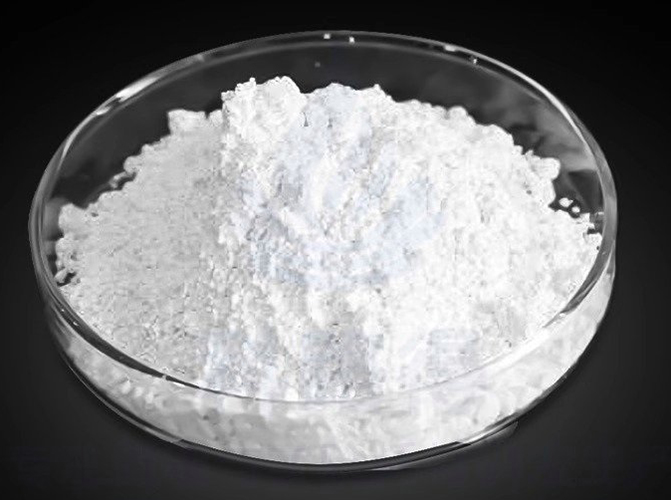
The excellent ion transport properties of LATP solid electrolyte originate from its NASICON-type crystal structure. In the compound Li1.3Al0.3Ti1.7(PO4)3, lithium ions are primarily located at the M1 and M3 sites and migrate through interconnected three-dimensional channels.
Several structural characteristics contribute to this behavior:
The rigid PO4 polyanion framework ensures strong structural stability
Open and continuous 3D diffusion pathways facilitate fast ion movement
Aluminum substitution introduces lattice distortion, which expands diffusion bottlenecks
This combination of structural stability and open conduction pathways reduces activation energy for lithium-ion migration, making LATP solid electrolyte particularly effective at room and moderately elevated temperatures.
III. What Affects LATP Ionic Conductivity?
The ionic conductivity of lithium aluminum titanium phosphate is influenced by multiple factors, many of which are closely related to its composition and microstructure.
First, stoichiometry plays a critical role. Small deviations in lithium content can significantly alter carrier concentration and lead to substantial changes in conductivity.
Second, temperature has a strong impact. Like most solid electrolytes, lithium aluminum titanium phosphate follows thermally activated ion transport behavior. At elevated temperatures (e.g., around 150℃), its ionic conductivity can increase several times compared to room temperature, highlighting its suitability for certain high-temperature applications.
Third, grain boundary resistance is an important limiting factor. In polycrystalline LATP, ion transport across grain boundaries is often slower than within grains. Doping with elements such as lanthanum (La) has been shown to reduce grain boundary resistance and improve overall conductivity.
Additionally, LATP solid electrolyte demonstrates good mechanical stability, which helps maintain structural integrity during repeated battery cycling.
IV. How to Improve LATP Performance?
To further enhance the performance of LATP solid electrolyte, researchers have developed several optimization strategies:
Elemental Doping
Doping with elements such as germanium (Ge), tantalum (Ta), or rare-earth elements can modify the crystal lattice and improve ionic transport pathways.
Nanostructuring
Reducing particle size to the nanoscale shortens diffusion distances and increases the effective surface area, leading to improved ion transport kinetics.
Interface Engineering
Introducing interfacial buffer layers between LATP solid electrolyte and electrodes can significantly reduce interfacial resistance and improve compatibility, especially in full-cell configurations.
Densification Techniques
Advanced sintering methods help reduce porosity and improve grain connectivity, further enhancing bulk and grain boundary conductivity.
V. Practical Challenges of LATP Solid Electrolyte
Despite its advantages, LATP solid electrolyte still faces several challenges that limit its large-scale commercial deployment.
One major issue is moisture sensitivity. Exposure to ambient air can lead to surface degradation and a decline in ionic conductivity, requiring careful handling and packaging.
Another key challenge is cost. The need for high-purity raw materials and controlled synthesis conditions increases production expenses, making LATP less competitive for mass-market applications at present.
Furthermore, LATP solid electrolyte is not chemically stable against lithium metal. Direct contact can result in reduction reactions and the formation of unstable interphases, which negatively affect battery performance and lifespan.
VI. Future Outlook
Looking ahead, LATP solid electrolyte remains a highly promising material in the field of solid-state batteries. Ongoing research is focused on improving its ionic conductivity, enhancing interfacial stability, and developing cost-effective manufacturing processes.
With continued technological advancements, LATP solid electrolyte is expected to play an important role in enabling safer and more durable batteries. As the global demand for energy storage continues to grow, materials like LATP could become key enablers of next-generation battery technologies, particularly in applications requiring high safety and long cycle life.
What is LATP?
LATP is an oxide solid electrolyte, officially known as lithium aluminum titanium phosphate, with the molecular formula Li1+xAlxTi2-x(PO₄)₃, x=0~1. It belongs to the NASICON-type fast ion conductor category, possessing a three-dimensional lithium-ion transport channel, and is widely used in solid-state lithium batteries.
What is the ionic conductivity of lithium aluminum titanium phosphate?
Lithium aluminum titanium phosphate (or lithium aluminum titanium phosphate, commonly abbreviated as LATP) is an important inorganic solid electrolyte material with a spinel-like crystal structure. Its general chemical formula is usually represented as Li₁₊ₓAlₓTi₂₋ₓ(PO₄)₃ (x=0~1). It exhibits high lithium-ion conductivity at room temperature (up to 10⁻⁴ S/cm) and extremely low electronic conductivity, good thermal stability (decomposition temperature above 300℃), and relative stability to moisture and air.
What affects LATP ionic conductivity?
Several factors influence the ionic conductivity of LATP, including its elemental composition, temperature, doping, and mechanical stability. Small variations in lithium content can significantly change conductivity, while higher temperatures (e.g., 150 °C) can increase it by several times compared to room temperature. In addition, doping with elements such as lanthanum can reduce grain boundary resistance and enhance ion transport. Its relatively good mechanical strength also helps maintain stable performance during battery operation.
How to improve the ionic conductivity of LATP?
The ionic conductivity of LATP can be improved by elemental doping (doping with small amounts of other elements such as germanium and tantalum), nano-sizing, and interface optimization (adding a buffer layer between LATP and the electrode).