


Lithography is the backbone of semiconductor fabrication. The ability to pattern nanoscale features onto silicon wafers determines transistor density, power efficiency, and overall chip performance. While Extreme Ultraviolet (EUV) lithography relies on plasma-generated light sources, rare earth materials play essential supporting roles in laser subsystems and optical protection components.
One of the most widely used laser materials is neodymium-doped yttrium aluminum garnet (Nd:YAG). In this crystal structure, neodymium ions (Nd³⁺)—a rare earth element—act as the active laser medium. Nd:YAG systems generate 1.064 μm infrared laser light, which can be frequency-doubled to 532 nm or converted to 355 nm ultraviolet light. These wavelengths are crucial for precision metrology, wafer alignment, and inspection systems inside advanced fabrication facilities.
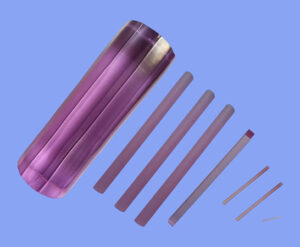
Without rare earth materials like neodymium and yttrium, stable and high-power solid-state lasers would not be possible at the performance levels required for semiconductor manufacturing.
Terbium-based materials provide another example. Terbium gallium garnet (TGG) crystals are used in optical isolators to protect high-power laser sources from back reflections. Leveraging the strong magneto-optical Faraday effect of terbium ions, these components ensure one-way light transmission, safeguarding expensive laser equipment in EUV and DUV lithography systems.
Looking forward, research into thulium-doped laser systems suggests that rare earth materials may further improve EUV source efficiency. Higher conversion efficiency could significantly reduce lithography costs, which remain one of the most capital-intensive aspects of semiconductor production.
As transistor structures become increasingly complex, achieving ultra-flat wafer surfaces is essential. Chemical Mechanical Planarization (CMP) ensures layer uniformity and surface smoothness at the nanometer scale.
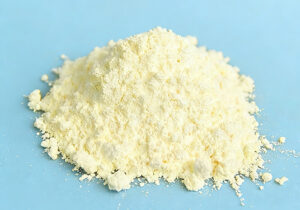
Among all rare earth materials used in semiconductor manufacturing, cerium oxide (CeO₂) plays a particularly critical role. Unlike conventional abrasives such as silica (SiO₂) or alumina (Al₂O₃), cerium oxide participates in both chemical and mechanical interactions during polishing.
In alkaline CMP slurries, CeO₂ chemically reacts with silicon dioxide to form cerium silicate compounds that can be easily removed. This dual-action mechanism increases material removal rates while maintaining high selectivity. It effectively polishes oxide layers without significantly attacking adjacent materials like silicon nitride.
Because of this combination of efficiency and selectivity, cerium-based rare earth materials have become the industry standard for shallow trench isolation (STI) processes and other oxide planarization steps.
As device geometries shrink further, the demand for high-purity, tightly controlled cerium oxide particles will only grow, reinforcing the strategic importance of rare earth materials in advanced nodes.
As wireless communication standards evolve, rare earth materials are driving improvements in RF device performance.

One prominent example is aluminum scandium nitride (AlScN) thin films. Scandium, classified among rare earth materials, significantly enhances the piezoelectric properties of aluminum nitride when incorporated into its crystal lattice. The resulting AlScN films are used in bulk acoustic wave (BAW) filters, which are critical components in 5G RF front-end modules.
Higher piezoelectric coefficients translate into improved filter bandwidth and signal performance, enabling faster and more reliable wireless communication. As 5G expands and 6G research progresses, scandium-based rare earth materials are expected to play an even larger role.
In addition, rare earth elements such as neodymium and praseodymium contribute to advanced magnetic thin films used in data storage technologies. Their unique electronic configurations enhance magnetic anisotropy and stability, supporting continued improvements in storage density.
One of the most promising long-term applications of RE materials lies in silicon photonics. Integrating optical functionality directly onto silicon chips could dramatically improve data transmission efficiency in data centers, AI processors, and high-performance computing systems.
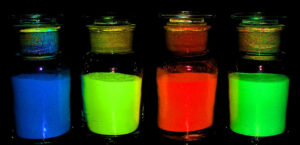
Europium oxide (Eu₂O₃) thin films demonstrate strong electroluminescent properties due to the characteristic 4f electron transitions of europium ions. Unlike many conventional semiconductor emitters, rare earth luminescent materials often exhibit stable emission characteristics across a wide range of concentrations.
By integrating europium-based rare earth materials onto silicon substrates, researchers aim to develop CMOS-compatible light sources. This approach could overcome compatibility challenges associated with traditional III-V semiconductors such as GaN.
If successful, rare earth materials could enable fully integrated optical interconnects, fundamentally transforming chip architecture and energy efficiency.