ITO Film: A Transparent Conductive Material Behind Modern Technology

View Our Products

Contact Us Now !

A seemingly ordinary transparent film can awaken the entire digital world with just a light touch of your fingertip. It is the magician hidden behind modern technology — the ITO film.

ITO film is a material with high transparency and electrical conductivity. It is widely used in electronic display devices, solar cells, touch screens, electromagnetic shielding, and other fields. It features low processing cost, high photoelectric conversion efficiency, and strong adaptability. Its electrical and optical properties can be optimized by adjusting composition and preparation processes. Therefore, ITO film plays an irreplaceable role in modern technology.

1. What is ITO Film?

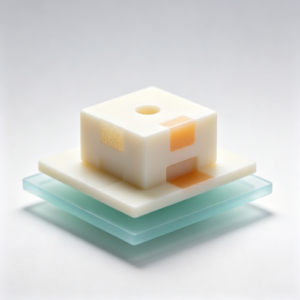
ITO film, short for Indium Tin Oxide transparent conductive film, is produced by depositing an indium tin oxide conductive layer onto transparent substrates (such as glass or PET plastic) through magnetron sputtering technology.

This film is composed of 90% indium oxide and 10% tin oxide, showing a characteristic light yellow to greenish-yellow color. It successfully solves the long-standing problem in materials science of combining transparency with conductivity: traditional metal materials are conductive but opaque, while glass is transparent but non-conductive.

Indium tin oxide ITO films - VIMATERIAL

The uniqueness of ITO lies in its semiconductor properties. Its bandgap is greater than 3 eV, which allows high transmittance in the visible light region while maintaining good electrical conductivity.

2. Core Properties of ITO Films

Optical Properties — High Transparency

ITO is a wide-bandgap thin-film material with a bandgap of 3.5–4.3 eV.

In the visible light region, since the photon energy is lower than the bandgap energy, ITO absorbs little visible light and therefore has high light transmittance. In the 400–700 nm visible range, the transmittance can reach 85%–95%.

In the ultraviolet region, strong absorption occurs due to bandgap excitation, with an absorption threshold of 3.75 eV (approximately 330 nm). In the near-infrared region, reflection increases because of carrier plasma oscillation, resulting in low transmittance.

Electrical Properties — High Conductivity

From a microscopic perspective, when Sn is doped into In₂O₃, Sn atoms replace In atoms in the crystal lattice in the form of SnO₂. Since indium is trivalent, the formation of SnO₂ contributes one extra electron to the conduction band. At the same time, oxygen vacancies are generated under oxygen-deficient conditions.

This leads to:

  • Carrier concentration: 10²⁰–10²¹ cm⁻³
  • Mobility: 10–30 cm²/V·s
  • Film resistivity: on the order of 10⁻⁴ Ω·cm

These structural changes give ITO films good electrical conductivity.

Good Stability

In terms of physical stability, ITO films have high mechanical hardness and can withstand a certain degree of external force without damage.

In terms of chemical stability, they are resistant to water, acids, and alkalis, maintaining reliable performance under various chemical environments. This ensures long-term stable use in industrial applications.

Tunable Properties

By adjusting composition and process parameters, the electrical and optical properties of ITO films can be controlled. For example, changing the film thickness and doping level can regulate resistivity and transparency to meet different application requirements.

3. Preparation Methods of ITO Conductive Films

A. Sputtering Method

Sputtering is the mainstream technology for preparing ITO films, including DC sputtering and RF sputtering.

The principle is that argon plasma ions bombard the ITO target, causing atoms to be ejected and deposited onto the substrate to form a film.

ITO Target - VIMATERIAL

DC sputtering: suitable for conductive targets, high efficiency, but parameters are harder to control.

RF sputtering: suitable for non-conductive targets, higher precision, but slower deposition rate.

Key parameters include target purity, deposition rate, and substrate temperature. For example, increasing substrate temperature can improve crystallinity and conductivity, while target purity significantly affects transparency.

B. Evaporation Method

Evaporation includes thermal evaporation and electron-beam evaporation. The material is heated and evaporated, then deposited onto the substrate.

Thermal evaporation: simple but limited precision.

Electron-beam evaporation: higher precision but higher cost.

ITO Pellets

This method is suitable for producing thin and uniform films and is commonly used in photovoltaics.

C. Chemical Vapor Deposition (CVD)

CVD forms films through chemical reactions of gaseous precursors on the substrate surface. It is suitable for low-temperature preparation and provides good adhesion, making it especially suitable for flexible substrates.

D. Other Methods

Other explored methods include spray coating, sol–gel processes, and laser annealing.

Spray coating: simple but less uniform.

Sol–gel: suitable for low temperature but prone to cracking.

Laser annealing: improves local crystallization and conductivity.

4. What's the use of ITO Films?

Photovoltaics: ITO films serve as transparent electrodes in heterojunction solar cells, improving light absorption and charge transport efficiency. They are also used in perovskite and CIGS thin-film solar cells.

Display Panels: With high transparency (85–95%) and low resistivity (10⁻⁴–10⁻³ Ω·cm), ITO films are key materials for LCDs, OLEDs, and touchscreens. They are widely used in smartphones, tablets, and interactive displays.

ITO films - VIMATERIAL

Smart Dimming: By adjusting transparency through an electric field, ITO films enable dynamic energy saving and shading, suitable for green buildings and automotive glass.

Emerging Applications: ITO films are increasingly used in AR/VR optical devices, medical sensors, and other emerging industries.

6. How to Improve ITO Film Performance?

Composition Adjustment and Optimization

The performance of indium tin oxide (ITO) thin films largely depends on their composition ratio and material purity. Achieving an optimal balance between optical transparency and electrical conductivity is the key to fabricating high-performance ITO films.

Composition Ratio Control

Indium Oxide to Tin Oxide Ratio: Adjusting the ratio of indium oxide (In₂O₃) to tin oxide (SnO₂) is a critical factor affecting both conductivity and transparency. Generally, increasing the tin oxide content enhances the electrical conductivity of the film; however, excessive tin oxide may reduce optical transparency.

Dopant Selection: In addition to the primary components, introducing suitable dopants (such as zirconium or titanium) can further optimize the film properties by improving carrier concentration and structural stability.

Purity Improvement

High-Purity Raw Materials: Using high-purity indium oxide and tin oxide precursors significantly improves the quality and performance of the resulting films.

Refined Processing: Advanced purification and refining processes help reduce impurities and defects, thereby enhancing the overall electrical and optical performance of ITO films.

Thermal Treatment Process

Thermal treatment plays a crucial role in improving the crystallinity and conductivity of ITO films.

Purpose of Thermal Treatment

Enhancing crystallinity: Proper annealing improves crystal quality and carrier mobility, resulting in better conductivity.

Stress relief: Thermal processing removes internal stress generated during deposition, improving film stability and uniformity.

Optimization of Annealing Parameters

Temperature control: Excessively high temperatures may damage the film structure, whereas insufficient temperatures may fail to enhance performance.

Time control: The annealing duration must be carefully optimized to achieve the best film properties.

Surface and Structural Analysis of ITO Films

Comprehensive surface and structural characterization is essential for understanding and optimizing the optical and electrical performance of ITO films.

Surface Roughness Analysis

Surface roughness strongly influences both optical transparency and electrical characteristics. Excessive roughness can reduce carrier injection efficiency, increase light scattering, decrease transmittance, and may even cause pinholes or delamination in subsequent coatings (e.g., SiO₂ protective layers).

Roughness Measurement Techniques

Atomic Force Microscopy (AFM): Provides high-resolution surface morphology and precise roughness measurements through probe scanning.

Optical Interferometry: A fast, non-destructive method for evaluating surface roughness based on optical interference principles.

Effects of Roughness on Performance

Optical properties: Surface irregularities increase scattering and reduce transparency.

Electrical properties: Non-uniform current pathways degrade film conductivity.

Crystal Structure Analysis

The crystal structure of ITO films is another key factor determining their electrical performance. Optimized crystallinity can significantly enhance conductivity.

Characterization Techniques

X-ray Diffraction (XRD): Determines crystal structure, phase composition, and grain size through diffraction patterns.

Transmission Electron Microscopy (TEM): Provides high-resolution images of crystal arrangements and defects.

Influence on Performance

Conductivity: Improved crystallinity reduces grain boundaries and electron scattering, leading to higher conductivity.

Stability: Uniform and well-ordered crystal structures enhance chemical and mechanical stability.

ITO Plate target - VIMATERIAL

Thickness Analysis

Film thickness is a key parameter affecting the electrical properties, optical performance, and fabrication cost of ITO films. Proper thickness optimization is essential to balance conductivity, transparency, and material consumption.

Influence on Performance

Electrical properties: Sheet resistance varies with thickness. Thicker films generally exhibit lower resistance, while thinner films show higher resistance, requiring optimization based on application needs.

Optical properties: Thickness influences optical path difference and interference effects. Non-uniform films may cause shifts in the visible-light transmittance spectrum.

Cost efficiency: Reducing thickness within acceptable performance limits lowers material usage and cost. Every 10 nm reduction can decrease indium consumption by approximately 15%, which is particularly beneficial for large-area photovoltaic applications.

Indium tin oxide (ITO) thin films, as an important transparent conductive material, have broad application prospects in electronic display devices, solar cells, and other related fields. With the continuous advancement in understanding and optimization of their properties, it can be anticipated that the applications of ITO films will become increasingly widespread, and their role in future technological innovations will be even more indispensable.

Contact Us

Contact Us