


Niobium alloys are valued for their exceptional high-temperature strength, corrosion resistance, and unique superconducting properties. They play an important role in aerospace propulsion systems, superconducting magnets, chemical processing equipment, and nuclear technology. Below is an overview of several major categories of commonly used niobium alloys and their characteristics.
1. Niobium–Zirconium Alloys (Nb-Zr Series)
These are the most fundamental niobium alloys. Zirconium additions significantly increase the strength and creep resistance of niobium while maintaining good formability and weldability. They also provide good oxidation resistance when used with suitable coatings.
Typical grade: Nb-1Zr (most widely used)
Composition: About 1 wt% Zr added to niobium
Characteristics: Good strength, excellent corrosion resistance (particularly against liquid metals), low thermal-neutron absorption cross section.
Applications: Early jet-engine combustion liners, cladding for space nuclear reactor fuel elements, thermal-protection components for spacecraft.
2. Niobium–Hafnium Alloys (Nb-Hf Series)
Hafnium is a far more potent strengthener than zirconium, providing major improvements in high-temperature mechanical performance.
Typical grade: Nb-10Hf-1Ti (a key constituent of the well-known C-103 niobium alloy)
Composition: ~10% Hf and 1% Ti
Characteristics: One of the most widely used and best-known niobium alloys; excellent high-temperature strength and creep resistance; operating range ~1090–1400 °C but requires silicide coatings for oxidation protection.
Applications: Liquid-rocket nozzle extensions, thrust chambers, aerospace engine components, high-temperature fasteners.
Other high-performance Nb–Hf–W alloys:
C-3009 (Nb-30Hf-9W), WC-3015 (Nb-30Hf-15W)
These rely on high hafnium and tungsten contents to significantly enhance strength and working temperature while maintaining acceptable fabricability.
Applications: Higher-performance propulsion components where C-103 niobium alloy is insufficient.
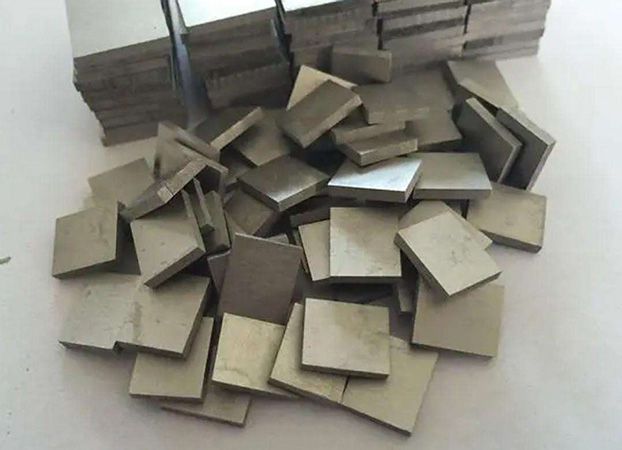
3. Niobium–Tungsten Alloys (Nb-W Series)
Tungsten is one of the most effective elements for improving the high-temperature strength of niobium. Nb-W alloys are the foundation of today’s ultra-high-performance niobium systems.
Typical grades: Nb-10W-1Zr-0.1C, Nb-28W-1Zr-0.1C
Composition: Niobium with 10–28% W and ~1% Zr
Characteristics: Outstanding high-temperature strength, excellent creep resistance, good formability; high tungsten contents increase density.
Applications: High-temperature components in aerospace systems such as rocket nozzles, turbine components, and hypersonic leading edges.
4. Niobium–Titanium Alloys (Nb-Ti Series)
Although structurally they resemble titanium alloys, these materials are primarily niobium based and are important superconducting materials rather than high-temperature structural alloys.
Typical grade: Nb-47Ti
Composition: ~47 at% Ti — the optimum composition for superconducting performance.
Characteristics: Excellent superconducting properties at liquid-helium temperatures (4.2 K), including high critical current density and upper critical field; good toughness and workability.
Applications: Fabrication of superconducting magnets for MRI systems, particle accelerators (e.g., the LHC), and fusion devices.
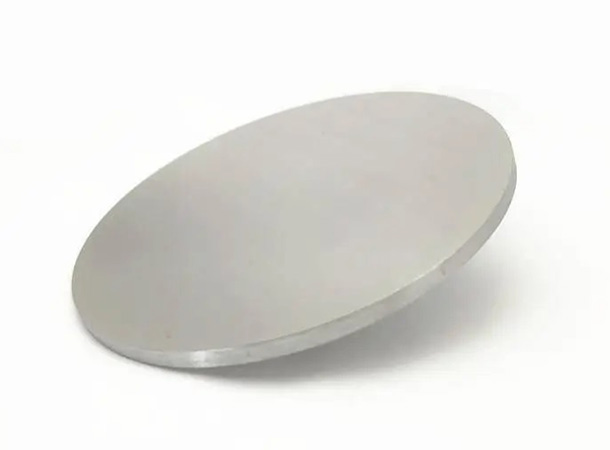
5. Niobium–Tin Intermetallic Compound (Nb₃Sn)
Nb₃Sn is a brittle intermetallic compound rather than a conventional alloy.
Characteristics: Higher critical temperature and critical magnetic field than Nb-Ti, but extremely brittle and difficult to form.
Applications: Typically fabricated by internal-tin or bronze-route precursor wire processes, where the Nb₃Sn phase is formed during heat treatment. Used for very-high-field (>10 T) superconducting magnets such as NMR spectrometers, next-generation accelerators, and fusion systems.
6. Other Specialized Niobium Alloys
Nb-752 (Nb-10W-2.5Zr)
Characteristics: Strengthened with tungsten and zirconium; excellent high-temperature strength and creep resistance.
Applications: Rocket-engine high-temperature structural components.
C-129Y (Nb-10W-10Hf-0.1Y)
Characteristics: Based on Nb-752 with added hafnium and trace yttrium to enhance oxidation resistance and high-temperature strength.
Applications: High-performance aerospace propulsion components.
FS-85 (Nb-28Ta-10W-1Zr)
Characteristics: A well-known high-strength niobium alloy strengthened by tantalum, tungsten, and zirconium; extremely high strength and creep resistance.
Applications: Ultra-high-temperature structures, space nuclear systems, and hypersonic vehicle leading edges.
PWC-11 (Nb-1Zr-0.1C)
Characteristics: Carbide-dispersion strengthening provides excellent creep resistance.
Applications: Components requiring long-term stability at elevated temperatures, such as fuel-cladding structures for space nuclear reactors.
Summary and Comparison of Niobium Alloys
| Alloy Type | Main Composition | Key Characteristics | Typical Applications |
|---|---|---|---|
| Nb–1Zr | Nb–1 Zr | Good ductility and weldability; baseline high-temperature performance | Early jet-engine liners, nuclear cladding |
| C-103 | Nb–10Hf–1Ti | Excellent strength and fabricability | Rocket nozzles, aerospace hardware |
| C-3009 | Nb–30Hf–9W | Mid-high strength | High-demand propulsion components |
| WC-3015 | Nb–30Hf–15W | Extremely high strength | Advanced aerospace engine components |
| Nb–10W–1Zr | Nb–10W–1Zr | High strength and creep resistance | High-temperature structural parts |
| Nb–47Ti | Nb–47Ti | Outstanding superconductivity | MRI, accelerators |
| Nb₃Sn | Nb₃Sn | Very-high-field superconductivity (brittle) | High-field magnet systems |
| Nb-752 | Nb–10W–2.5Zr | High strength | Rocket-engine parts |
| C-129Y | Nb–10W–10Hf–0.1Y | Enhanced oxidation resistance | High-performance aerospace engines |
| FS-85 | Nb–28Ta–10W–1Zr | Extremely high strength, excellent creep resistance | Extreme-temperature structures, space reactors |
| PWC-11 | Nb–1Zr–0.1C | Excellent creep resistance | Long-term high-temperature applications |
How to Choose a Niobium Alloy?
Selection depends on the specific performance requirements, balancing high-temperature strength, creep resistance, low-temperature ductility, fabricability, weldability, and cost.
For maximum high-temperature strength: Nb-W or Nb-W-Hf systems (e.g., WC-3015).
For well-balanced properties and formability: Alloys like C-103.
For superconducting applications: Nb-Ti for most uses; Nb₃Sn for very high magnetic fields.