


What is germanium metal?
Germanium (Ge) is a critical metalloid widely used in semiconductors, infrared optics, fiber-optic communication, and high-efficiency solar cells. Owing to its unique electrical and optical properties, germanium has become one of the world’s most important critical raw materials for advanced technologies.
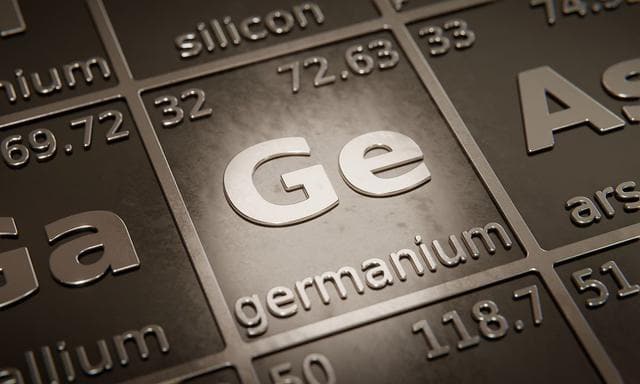
Is germanium more like a metal or nonmetal?
Physical properties
| Property | Value |
|---|---|
| Chemical Symbol | Ge |
| Atomic Number | 32 |
| Element Category | Metalloid |
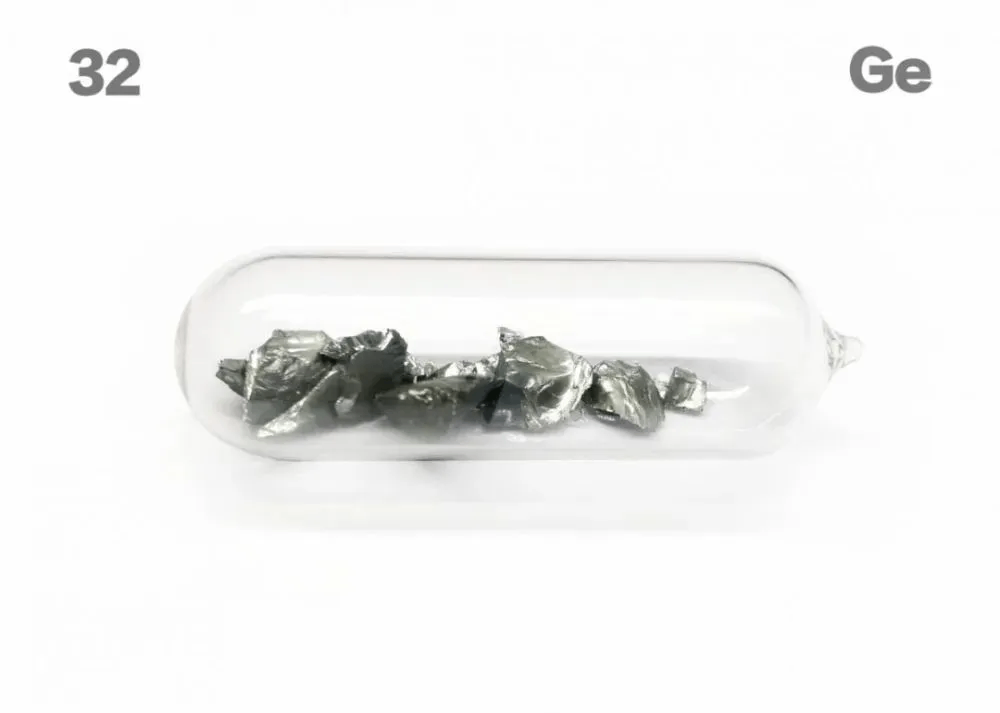
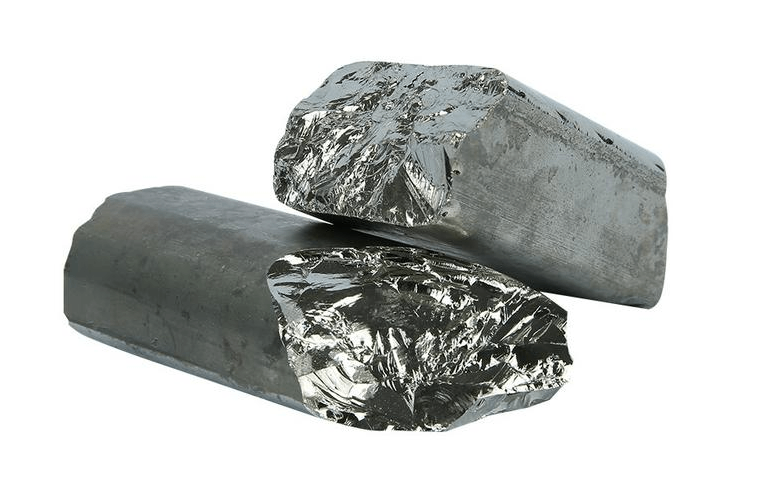
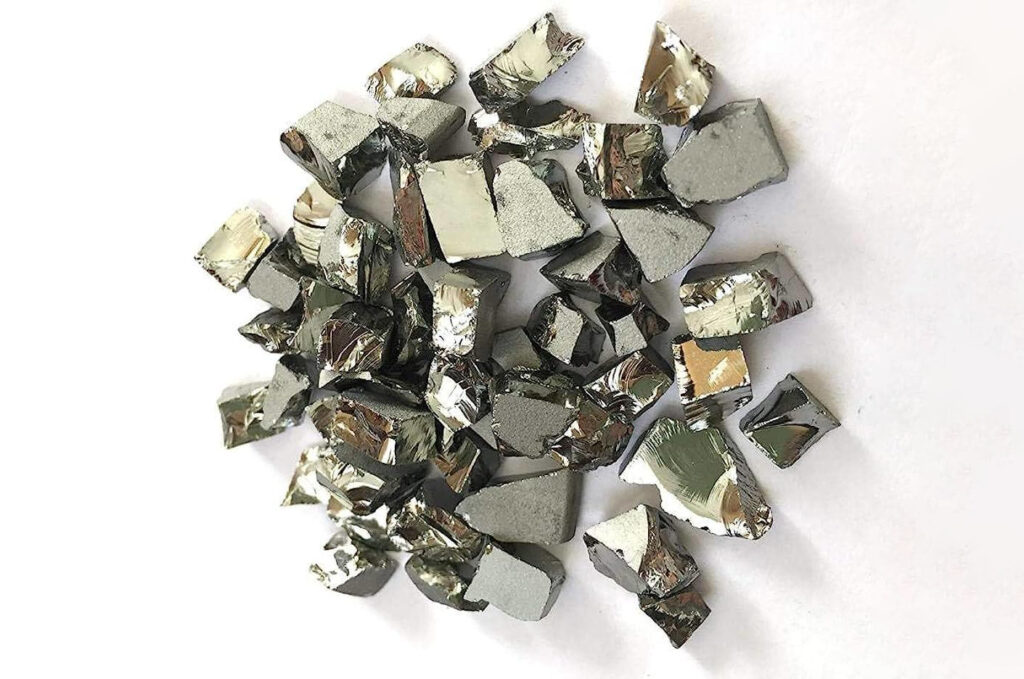
| Appearance | Silver-grey metallic solid |
| Atomic Weight | 72.63 g/mol |
| Density (20°C) | 5.323 g/cm³ |
| Melting Point | 938.25°C |
| Boiling Point | 2,833°C |
| Crystal Structure | Diamond Cubic |
| Mohs Hardness | 6.0–6.5 |
| Electrical Resistivity (20°C) | Approximately 0.46 Ω·m (Intrinsic Germanium) |
| Thermal Conductivity (20°C) | 60.2 W·m⁻¹·K⁻¹ |
| Band Gap (300 K) | 0.66 eV |
Chemical properties
| Chemical Property | Value |
|---|---|
| Oxidation States | +2, +4 (+4 is the most stable) |
| Electronegativity (Pauling) | 2.01 |
| Common Oxides | GeO₂ (most common), GeO |
| Chemical Stability | Stable in dry air and water at room temperature |
| Oxidation Behavior | Rapidly oxidizes above 600–700°C to form GeO₂ |
| Reactivity | Reacts with halogens and alkali metals to form various germanium compounds |
| Alloy & Compound Formation | Forms alloys, semiconductor compounds, and organogermanium compounds |
Semi-metallic properties
Because of these special properties of germanium, it is often classified as a semi-metallic element. Semi-metallic elements are located in the transition zone between metals and non-metals, and have the common properties of metals and non-metals. Germanium is such an element. It has some properties of metals, such as metallic luster and conductivity, and also exhibits some properties of non-metals, such as low conductivity and easy formation of compounds.
Where Does Germanium Come From? Sources and Supply Chain
With an average abundance of only around 1.6 ppm in the Earth’s crust, this element is considered one of the rare and dispersed metals. Due to its low concentration and uneven distribution, it rarely forms independent mineral deposits and is typically recovered as a by-product from other resources.
The main sources of supply include:
1. Zinc and Lead-Zinc Ores
The majority of primary production comes from zinc ore processing. During zinc smelting and refining, the element becomes concentrated in materials such as flue dust, leaching residues, and processing by-products, from which high-purity material can be extracted.
2. Germanium-Bearing Coal and Coal Fly Ash
Some coal deposits contain trace amounts of this valuable element. During coal combustion, it can become enriched in coal fly ash, where concentrations may be significantly higher than in the original coal. These residues represent an important potential secondary resource for recovery.
3. Recycling of Germanium-Containing Materials
As demand for advanced electronics and optical technologies continues to grow, recycling has become an increasingly important source. Waste generated during the manufacturing of the following products can be processed as valuable secondary resources. These recyclable sources are often referred to as “urban mines.”
- Fiber-optic components
- Infrared optical lenses
- Semiconductor devices
- High-efficiency solar cells
Why Is Germanium a Critical Material?
This material has attracted significant attention because of its unique combination of semiconductor performance, infrared transparency, and compatibility with advanced technologies.
Its key applications include:
- High-speed semiconductor devices
- Fiber-optic communication systems
- Infrared imaging and sensing equipment
- Space-based photovoltaic systems
- Advanced electronic and optoelectronic components
Unlike many common metals, this element is rarely mined as a primary resource. Its production depends largely on recovery from other mineral processing activities, making the supply chain relatively complex.
As a typical dispersed metal, it is mainly associated with zinc, copper-lead ores, and coal-related deposits rather than forming standalone mines. Global resources are limited and concentrated in a small number of regions, which contributes to its classification as a critical raw material.
The importance of this material comes from two key factors: its unique physical properties that are difficult to replace and its restricted global supply chain. These characteristics make it an essential component in modern communication networks, advanced electronics, renewable energy technologies, and strategic industrial applications.
Applications of germanium
Germanium is a high-value semiconductor material widely used in optics, electronics, renewable energy, telecommunications, and advanced manufacturing. Its unique electrical and optical properties make it indispensable in many high-tech industries.
1. Infrared Optics
It has a high refractive index, low optical dispersion, and excellent infrared transmission in the 2–14 μm wavelength range. These characteristics make it one of the most important optical materials for infrared systems.
Typical applications include:
- Infrared lenses
- Infrared windows
- Prisms
- Thermal imaging systems
- Night vision devices
- Infrared spectroscopy equipment
2. Semiconductor & Electronics
Ge was one of the first semiconductor materials used in transistors and remains important in modern electronics because of its high carrier mobility and excellent electrical performance.
It is widely used in:
- High-speed transistors
- Semiconductor diodes
- Photodetectors
- Integrated circuits
- SiGe semiconductor devices
- High-frequency communication chips
Compared with silicon, germanium offers higher carrier mobility, enabling faster switching speeds and improved device performance in specialized semiconductor applications.
3. Fiber Optics & Telecommunications
Germanium dioxide (GeO₂) is an important dopant in optical fibers. It increases the refractive index of silica glass, improving signal transmission efficiency over long distances.
Applications include:
- Optical fiber manufacturing
- Fiber-optic communication networks
- Optical amplifiers
- High-speed data transmission
4. Solar Energy
Ge is widely used as a substrate material for high-efficiency multi-junction solar cells because of its excellent electrical conductivity and lattice compatibility.
Typical applications include:
- Space solar panels
- Satellite power systems
- Concentrated photovoltaic (CPV) cells
- Aerospace power generation
5. Catalysts & Advanced Materials
Germanium compounds are also used in industrial manufacturing processes.
Typical applications include:
- PET polymerization catalysts
- Specialty glass production
- Alloy additives
- Organogermanium compounds
- Research and laboratory materials
Germanium vs. Gallium in Semiconductors
Although both Ge and Ga are considered critical semiconductor materials, they serve different purposes in modern electronics.
Germanium vs. Gallium in Semiconductor Applications
| Comparison | Germanium (Ge) | Gallium (Ga) |
|---|---|---|
| Material Type | Metalloid semiconductor | Post-transition metal |
| Main Advantage | High carrier mobility | Excellent compound semiconductor properties |
| Typical Semiconductor Materials | SiGe, Ge | GaAs, GaN |
| Key Applications | High-speed chips, photodetectors, infrared optics | LEDs, laser diodes, RF devices, power electronics |
| Communication | Fiber-optic communication | 5G and microwave communication |
| Renewable Energy | Multi-junction solar cell substrates | High-efficiency photovoltaic devices |
| Optoelectronics | Infrared optical components | Visible and UV optoelectronic devices |
| Typical Products | Germanium wafers, lenses, windows, substrates | Gallium metal, GaAs wafers, GaN epitaxial materials |
Ge is primarily used to improve the speed and performance of semiconductor devices, while gallium is essential for compound semiconductors used in optoelectronics, radio-frequency devices, and power electronics. Together, these two critical materials support the development of advanced communication systems, renewable energy technologies, and next-generation electronic devices.
How to buy germanium?
When buying germanium metal, you need to pay attention to the following points:
Quality: The quality of germanium metal has an important impact on its performance and application effect. When purchasing, you must pay attention to key indicators such as its purity and impurity content to ensure that you buy products that meet your needs.
Price: The price of germanium metal varies depending on factors such as purity, specifications, market supply and demand, etc. When purchasing, don’t just focus on the price, but consider the quality of the product and your own needs. At the same time, you should also pay attention to prevent some unscrupulous merchants from using low prices to attract customers for fraud.
Legality: Germanium is a regulated element, and its purchase and use must comply with relevant laws and regulations. When purchasing, be sure to choose a legal and compliant channel, and keep the relevant purchase receipts and certification documents so that you can provide a legal basis for future use or transportation.
Transportation: Ge belongs to the category of dangerous goods, and its transportation needs to comply with specific regulations and requirements. When purchasing, pay attention to choosing a supplier who can provide legal transportation services.
VIMATERIAL is a professional supplier of high-purity germanium metal. The purity of our products can reach 7N5. If you have any needs in this regard, please do not hesitate to contact us.
Conclusion
Germanium is indispensable for infrared optics, semiconductor manufacturing, fiber-optic communication, and advanced energy technologies. As demand for critical materials continues to grow, high-purity germanium will remain an essential material for future electronic and photonic innovations.
Frequently Asked Questions
Q1. What is germanium metal used for?
Ge is widely used in semiconductors, infrared optics, fiber-optic communication systems, high-efficiency solar cells, radiation detectors, and PET polymer catalysts. Its excellent electrical and optical properties make it an important material for advanced technologies.
Q2. Is Ge a metal or a metalloid?
Ge is classified as a metalloid (semi-metal). It combines the metallic appearance of metals with the semiconductor behavior of non-metals, making it suitable for electronic and optical applications.
Q3. Where is Ge found?
Ge is rarely mined as a primary metal. It is mainly recovered as a by-product during zinc ore processing and, to a lesser extent, from coal fly ash and recycled electronic materials.
Q4. Is germanium better than silicon?
Germanium has higher electron mobility than silicon, allowing faster electronic performance in certain applications. However, silicon is more abundant, less expensive, and remains the dominant semiconductor material. In many advanced devices, germanium complements rather than replaces silicon.
Q5. Can germanium be recycled?
Yes. It can be recovered from infrared optics, fiber-optic production waste, semiconductor manufacturing scrap, and photovoltaic materials. Recycling is becoming increasingly important because of its strategic value and limited primary supply.