Catalogries

Chemical Name:
Zinc sulfide
Formula:
ZnS
Product No.:
301600
CAS No.:
1314-98-3
EINECS No.:
215-251-3
Form:
Powder
HazMat:
Product ID Formula Purity Dimension Quantity Price in € Inquiry
301600PD001 ZnS 99.99% -200 Mesh 100g 97.00 Inquire
301600PD002 ZnS 99.99% -325 Mesh 500g 229.00 Inquire
Product ID
301600PD001
Formula
ZnS
Purity
99.99%
Dimension
-200 Mesh
Quantity
100g
Price in €
97.00
Product ID
301600PD002
Formula
ZnS
Purity
99.99%
Dimension
-325 Mesh
Quantity
500g
Price in €
229.00

Zinc sulfide powder is an inorganic compound composed of zinc and sulfur, with the chemical formula ZnS. It is used in optical materials, luminescent materials, infrared optics, and functional coatings because of its optical characteristics and suitability for different material-processing routes.

ZnS occurs in two principal crystalline forms: cubic zinc blende and hexagonal wurtzite. Its optical behavior and processing characteristics depend on factors such as crystal structure, purity, particle size, and material preparation.

VIMATERIAL supplies high-purity zinc sulfide (ZnS) powder with customizable purity, particle size, and packaging options to meet different application and processing requirements. Contact us to discuss your specifications and request a quotation.

Key Features

  • High purity: A nominal purity of ≥99.99% is available.
  • Customizable particle size: Particle-size specifications can be discussed according to coating, dispersion, and material-processing requirements.
  • Optical material applications: Suitable for evaluating and preparing materials for optical coatings and related applications.
  • Chemical composition: ZnS provides a defined zinc-to-sulfur composition for functional inorganic material systems.
  • Flexible specifications: Purity, particle size, quantity, and packaging can be discussed for different research and industrial requirements.

Technical Specifications

The following table provides the main product parameters. Confirm grade-specific values and availability with VIMATERIAL before placing an order.

Project Parameters
Chemical Formula ZnS
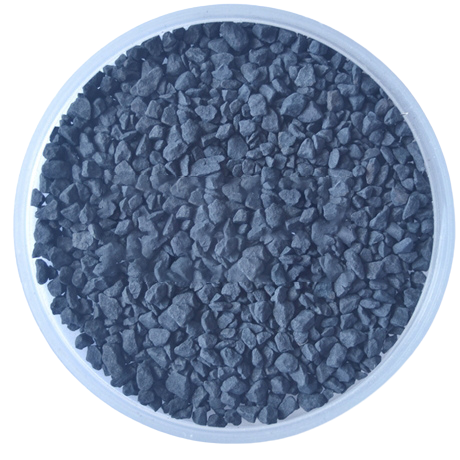
Appearance White to Pale Yellow Powder
Purity ≥ 99.99%
Particle Size Customizable
Surface Area 5-15 m²/g
Density 4.1 g/cm³
Solubility Insoluble in water, slightly soluble in acid
Packaging Aluminum Foil Bag/Plastic Bottle + Outer Carton, Moisture-Proof and Shock-Proof
Applications Optical Coatings, Infrared Windows, Phosphors, Laser Materials

Note: Values for purity, particle size, specific surface area, and other grade-dependent properties should be confirmed against the current product specification or certificate of analysis (CoA).

Applications of Zinc Sulfide Powder

  • Optical Coatings and Thin Films: ZnS is used in optical coating systems and thin-film research. Powder specifications should be matched to the selected deposition route, precursor preparation method, and film-performance requirements.
  • Infrared Optical Materials: Zinc sulfide is an established material in infrared optics. ZnS powder may be used as a starting material for developing or manufacturing optical materials, depending on the required processing route. Optical-grade performance depends on material quality, consolidation, microstructure, and finishing, rather than powder purity alone.
  • Phosphors and Luminescent Materials: ZnS is used in phosphor formulations and luminescent material systems. Its suitability depends on the host composition, activator or dopant selection, and preparation conditions.
  • Laser and Optical Components: ZnS is relevant to specialized optical material development and components. The final optical properties depend on the material form, fabrication process, and intended operating wavelength.
  • Electronic and Functional Materials: ZnS can be evaluated for research involving semiconductor materials, functional composites, and related inorganic systems. The appropriate powder grade depends on the required composition, impurity limits, and processing conditions.

How to Select ZnS Powder?

Choosing the right zinc sulfide powder starts with the intended application and manufacturing process.

  • Purity and impurity limits: Select a purity grade appropriate to the application. Where trace contamination may affect optical or electronic performance, request available impurity data and batch documentation.
  • Particle size and distribution: Define the target particle size and, where necessary, D10, D50, and D90 values. Particle size can affect dispersion, packing behavior, reaction rates, and the consistency of downstream processing.
  • Surface area and morphology: Consider specific surface area and particle morphology when powder reactivity, dispersion, or packing behavior is important. These properties should be assessed alongside particle size rather than used as substitutes for it.
  • Processing compatibility: Confirm whether the powder is intended for coating preparation, composite formulation, phosphor development, or another process. The required specification may differ significantly between applications.
  • Packaging and quantity: Specify the required quantity, packaging format, and moisture-control requirements. For sensitive applications, confirm whether additional documentation or impurity limits are needed.

Why Choose VIMATERIAL?

  • High-Purity Material: Reduces Impurities, Ensures Optical and IR Performance
  • Controllable Particle Size: Meets Different Application Requirements
  • Various Specifications Available: Available in Bulk or Custom Packaging
  • Technical Support: Provides Process Parameter Recommendations to Optimize Film or Coating Performance
  • Global Logistics: Safe, Moisture-Proof Packaging Ensures Damage-Free Transportation

Packaging and Shipping

Packaging: ZnS powder can be supplied in sealed, moisture-resistant inner packaging with protective outer packaging. Aluminum foil bags or suitable sealed containers may be considered according to the product grade and order requirements.

Storage: Store in a tightly closed container in a cool, dry, well-ventilated area. Protect the powder from moisture, contamination, and incompatible chemicals. Follow the product-specific safety data sheet (SDS) for handling and storage requirements.

Frequently Asked Questions

Q1. What is zinc sulfide powder used for?

Zinc sulfide powder is used in the development and manufacture of optical materials, coating systems, phosphors, luminescent materials, and other specialized inorganic material systems. Its suitability depends on the required material grade and processing route.

Q2. What purity of ZnS powder is available?

VIMATERIAL lists a nominal purity of ≥99.99% for the specified grade. Please confirm the available grade, impurity limits, and batch documentation when requesting a quotation.

Q3. Can I customize the particle size of zinc sulfide powder?

Particle-size customization can be discussed according to your application and processing requirements. If your process requires a specific D50, D10/D90 range, or particle-size distribution, include these details in your inquiry.

Q4. Is ZnS powder suitable for infrared optical applications?

ZnS is an established infrared optical material. However, powder suitability does not by itself guarantee the optical performance of a finished component. The required purity, fabrication method, microstructure, and final optical specifications should be considered together.

Q5. How should zinc sulfide powder be stored?

Keep the powder in a sealed container in a cool, dry, well-ventilated environment. Protect it from moisture and contamination, and consult the relevant SDS for handling precautions and chemical incompatibilities.

10.Related products

Zinc Selenide (ZnSe) Powder     

Nano Cadmium Sulfide (CdS) Powder

Optical Ceramic Powder Series

Recommended Product

QUALITY ASSURANCE

VI HALBLEITERMATERIAL GmbH (VIMATERIAL) employs a stringent quality assurance system to ensure the reliability of our product quality. Strict quality control is implemented throughout the entire production chain, and for defective products, we strictly enforce the principle of rework and redo. Each batch is released only after passing detailed specification tests.

Every batch of our materials is independently tested, and, if necessary, we send samples to certified companies for testing. We provide these documents and analysis certificates with the shipment to certify that our products meet the required standards.

Need More Help?

Contact our team of experts today and let us help you with your business!

Contact Us

Contact Us

Contact Us